Designing a student art loan service to deepen engagement with campus art
Project Detail
CS 247S Service Design Final Project
Team
Carolyn Lee
Lulu Sullivan
Vicky Wu
Matthew Mattei
Role
UX Designer
Timeline
10 Weeks
.𖥔 ݁ ˖ ✦ ‧₊˚ ⋅
Overview
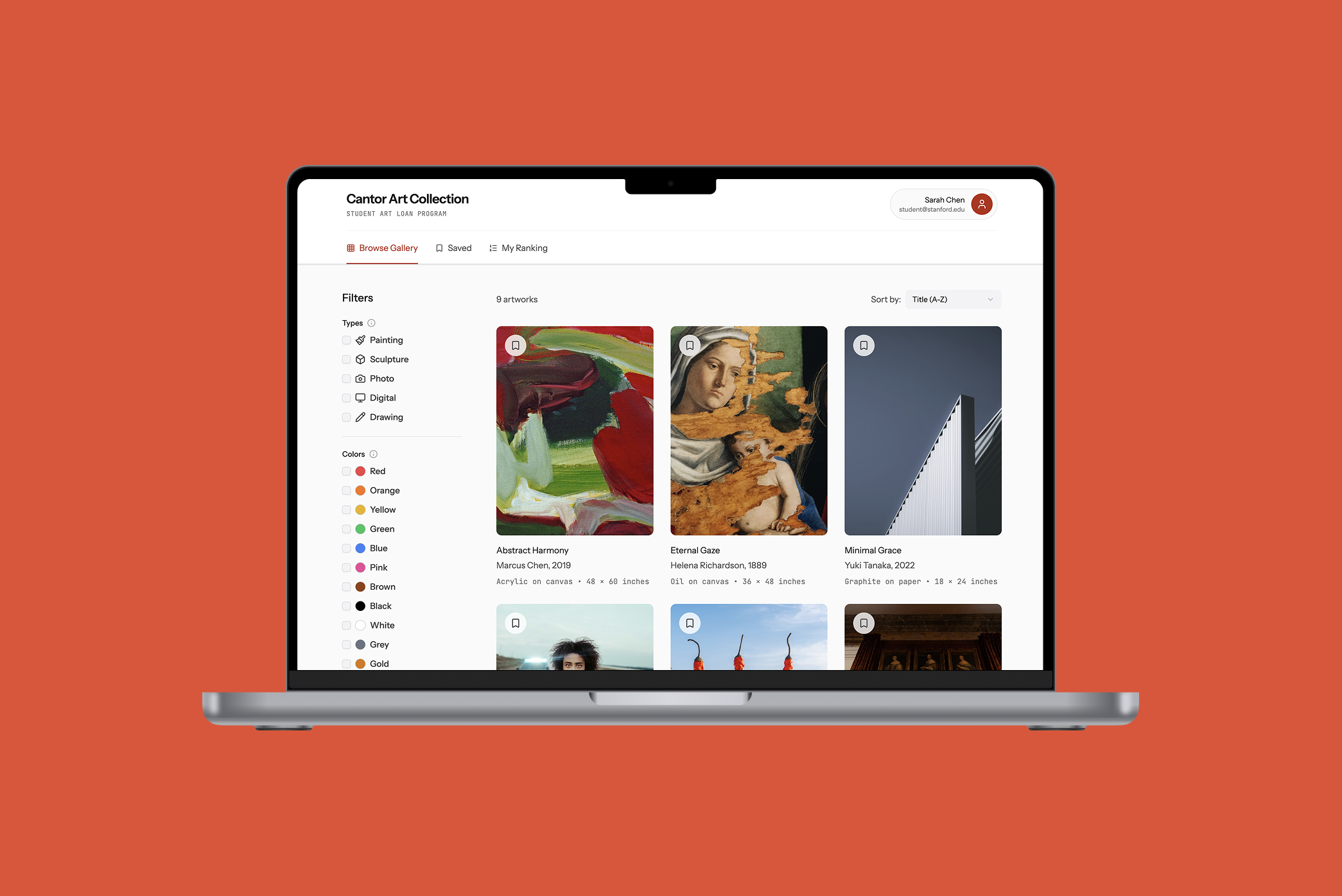
Designing a student artwork loan service to promote accessibility to art
In collaboration with the Stanford Cantor Arts Center, our team designed a pilot student art lending service inspired by peer university programs. The project explored how borrowing artwork for dorm rooms could make art more approachable, inclusive, and embedded in students’ daily lives, while remaining sustainable for museum staff.
Problem Space
Introducing a new pilot program would put more burden on museum staff
Through initial interviews with museum staff, we learned that the Cantor already has a lot on their plate, and that any new program would need to be designed with their limited time and resources in mind. This art borrowing program was proposed by the Cantor themselves; however, they needed more information about student interest and needs to justify the program and design it in a way that would be sustainable for them.
Needfinding
Interviewing across four key actor types
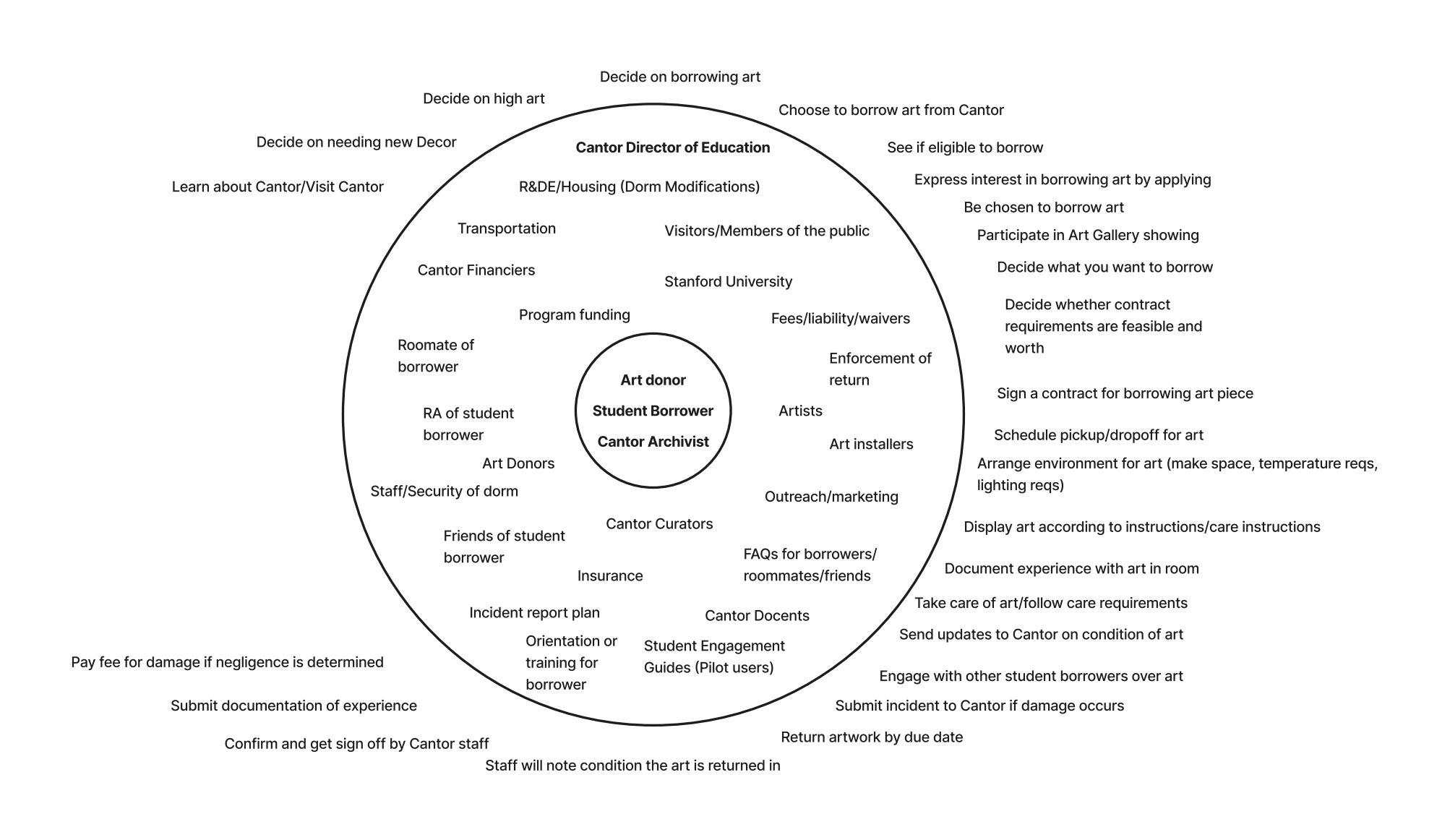
We interviewed 12 people across four stakeholder groups: Cantor directors, former student art borrowers (from universities like UofChicago and MIT), student guides, and Stanford students interested in borrowing. To identify actor types that would be impacted by the program, we created an actor map that visualized the relationships between borrowers, staff, and institutional stakeholders within the system of art borrowing.
Actor map visualizing relationships across the borrowing ecosystem
Interview Synthesis
Two grounded theories emerged
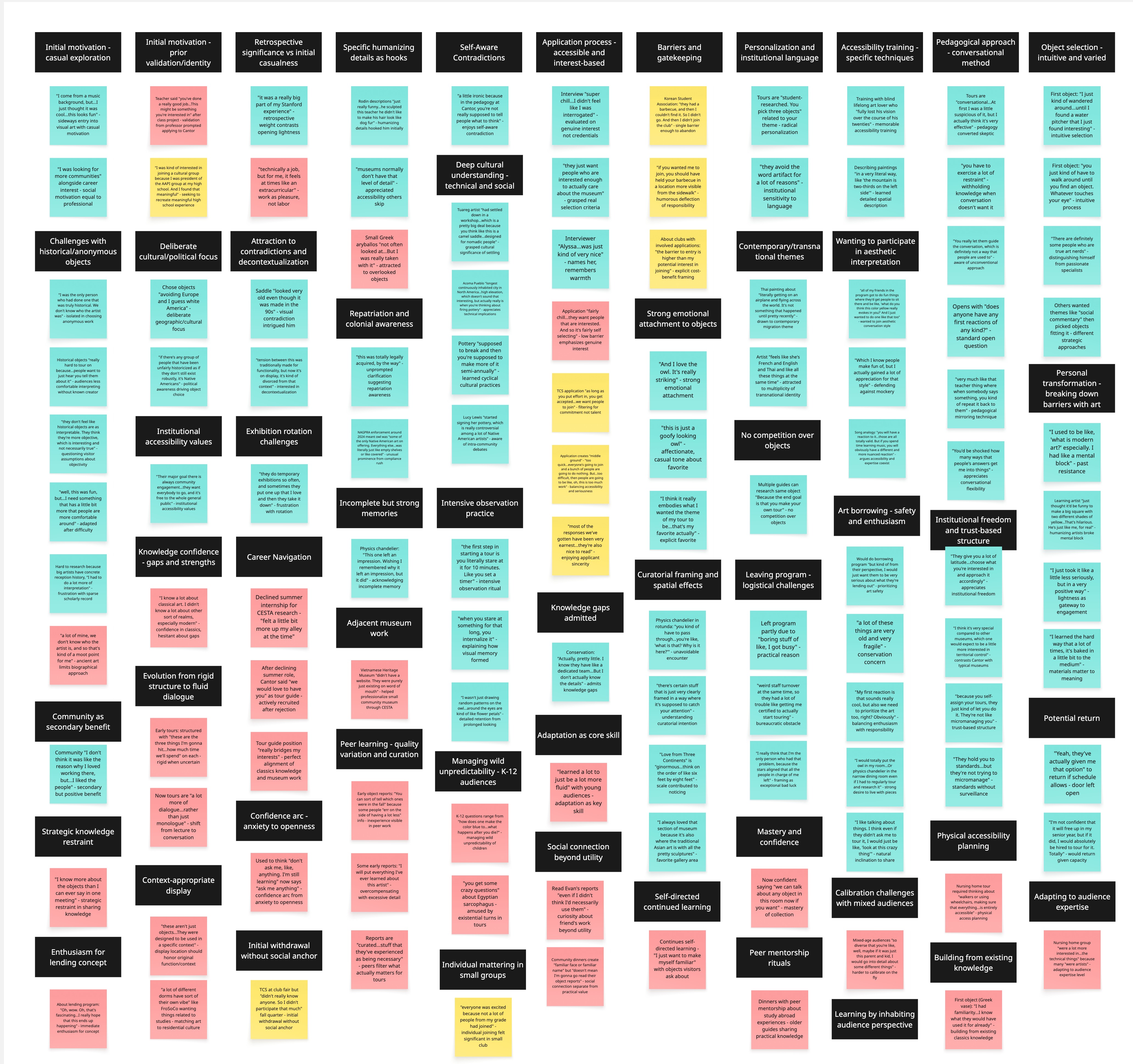
We synthesized our interviews into two grounded theories that reframed how the service should balance student enthusiasm with institutional capacity.
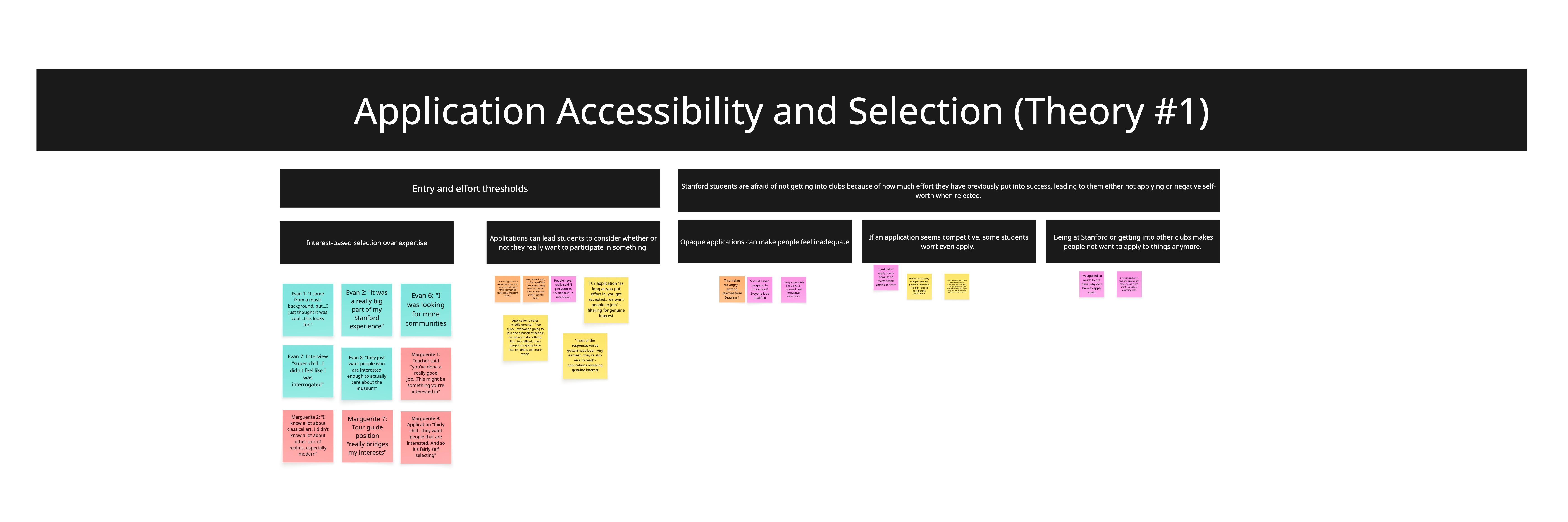
Theory 1: A good application should help students uncover value without overburdening them or the organization administering it.
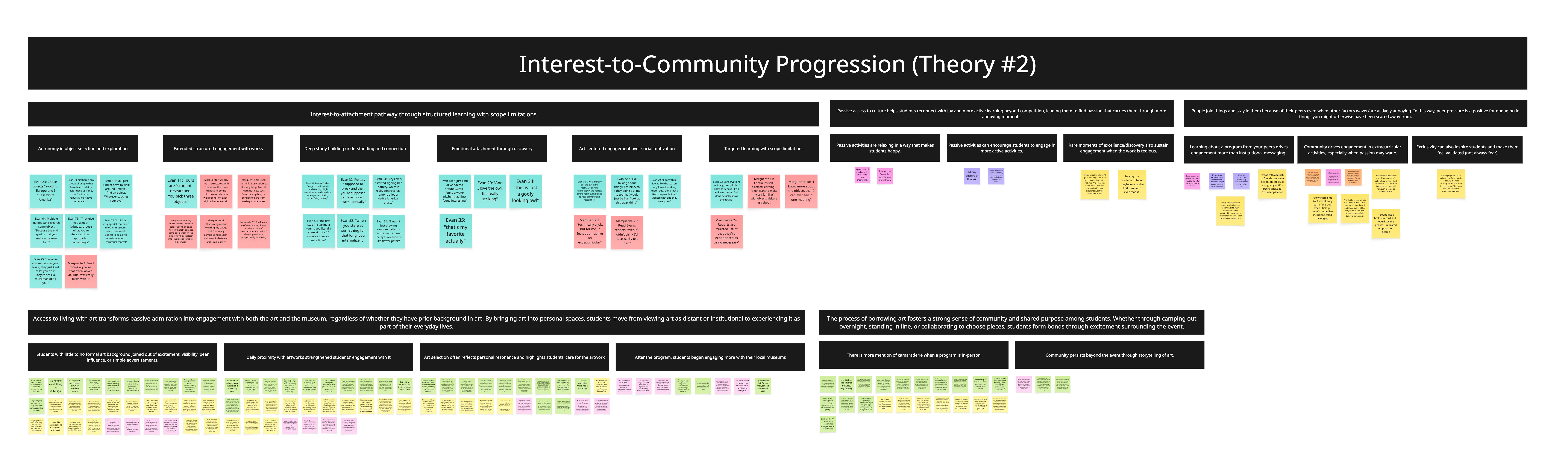
Theory 2: Initial interest sparks passion and community, while consistent access to art fosters long-term inclusion and excitement.
Grounded theory clustering from interview data
Application Accessibility & Selection (Theory 1)
Interest & Community Progression (Theory 2)
User Journeys
Mapping friction and opportunity across the borrowing lifecycle
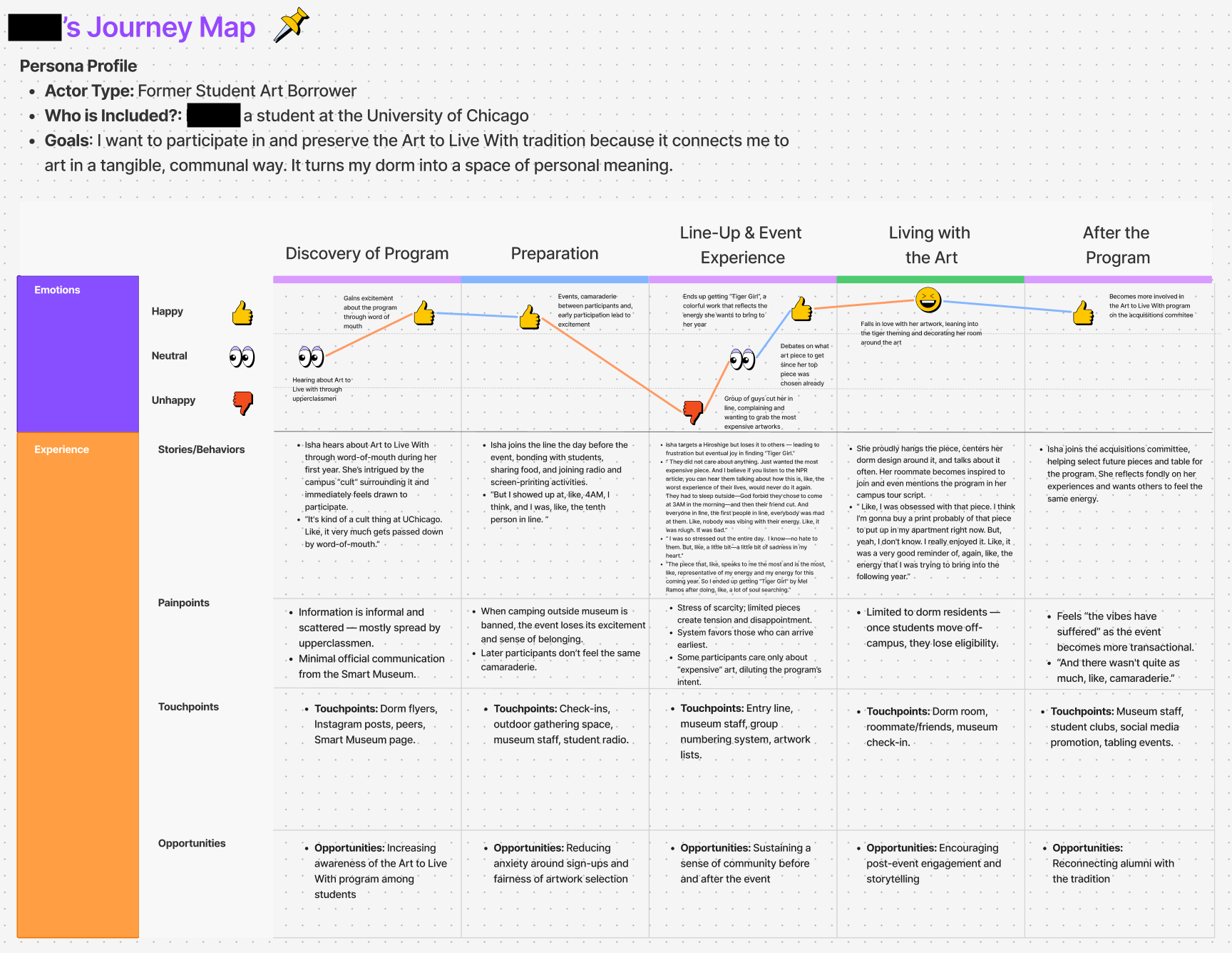
Journey maps helped us visualize the student experience from discovery to post-borrow reflection, highlighting emotional highs, drop-off risks, and staff workload spikes.
Student borrower journey map
How Might We
Reframing insights into design opportunities
How might we find excitement amongst students for borrowing art from Cantor?
How might we maximize satisfaction and curiosity around art borrowing?
How might we build lasting community into the borrowing experience over time?
Brainstorming
Diverging across multiple solution spaces
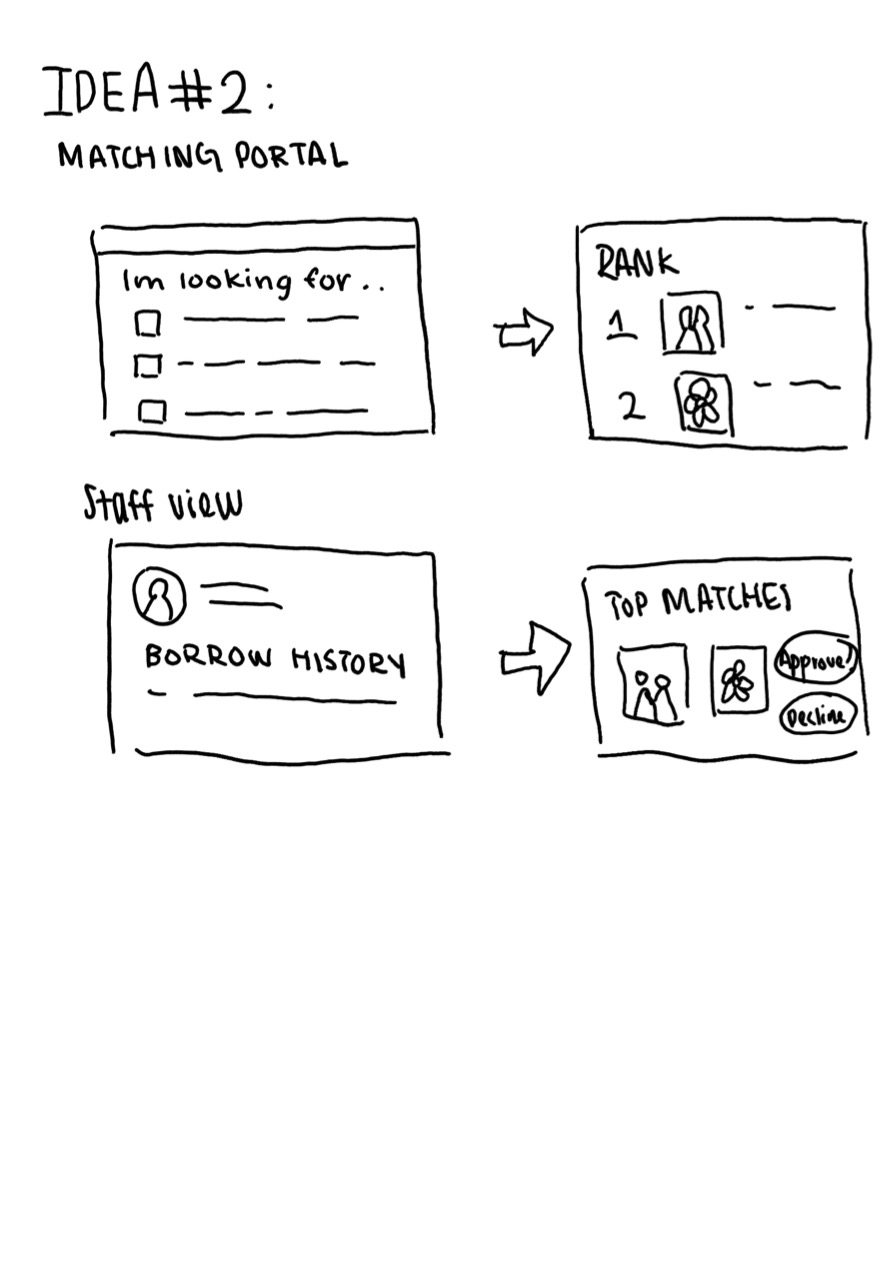
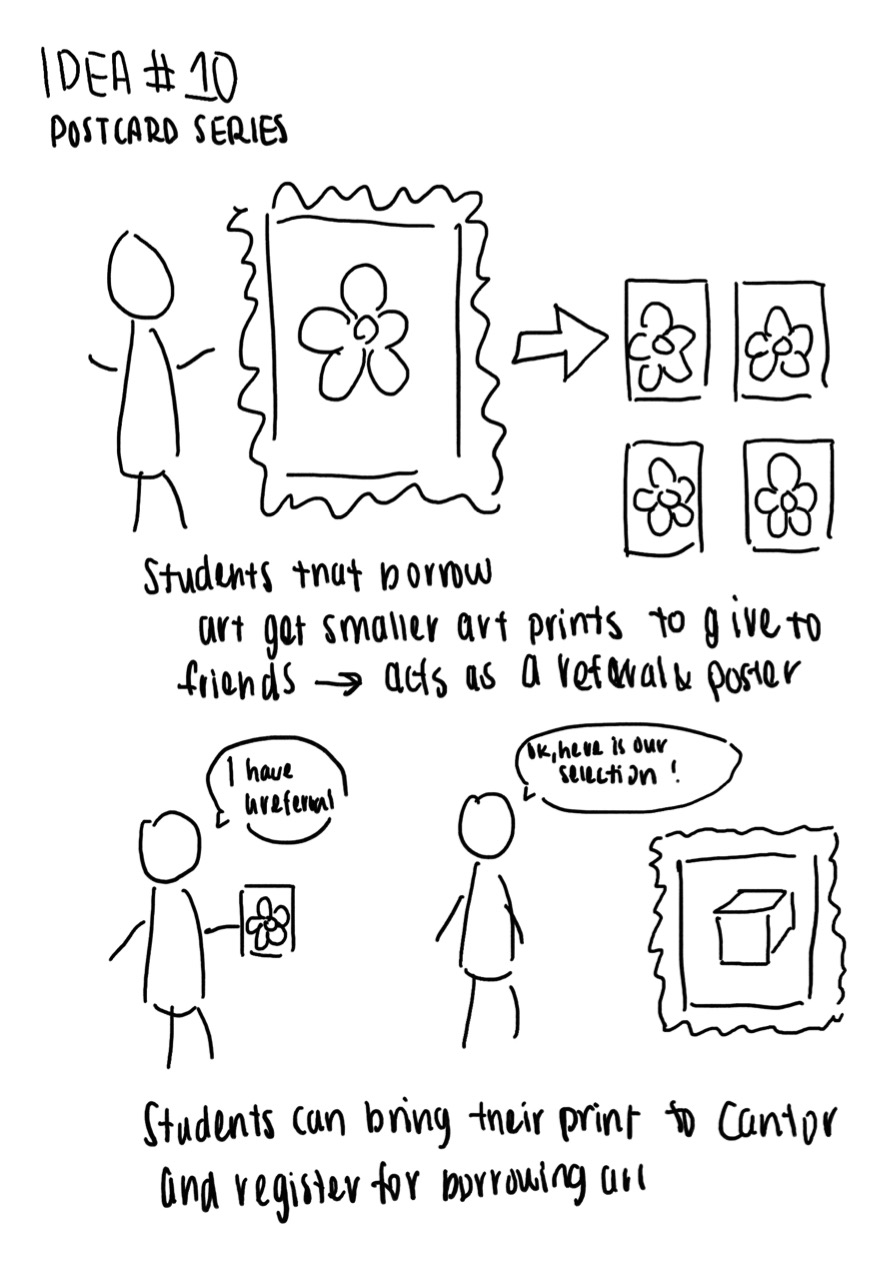
We explored multiple concepts including dating-app style matching, challenge-based applications, and postcard handouts to test how excitement and community could be sparked.
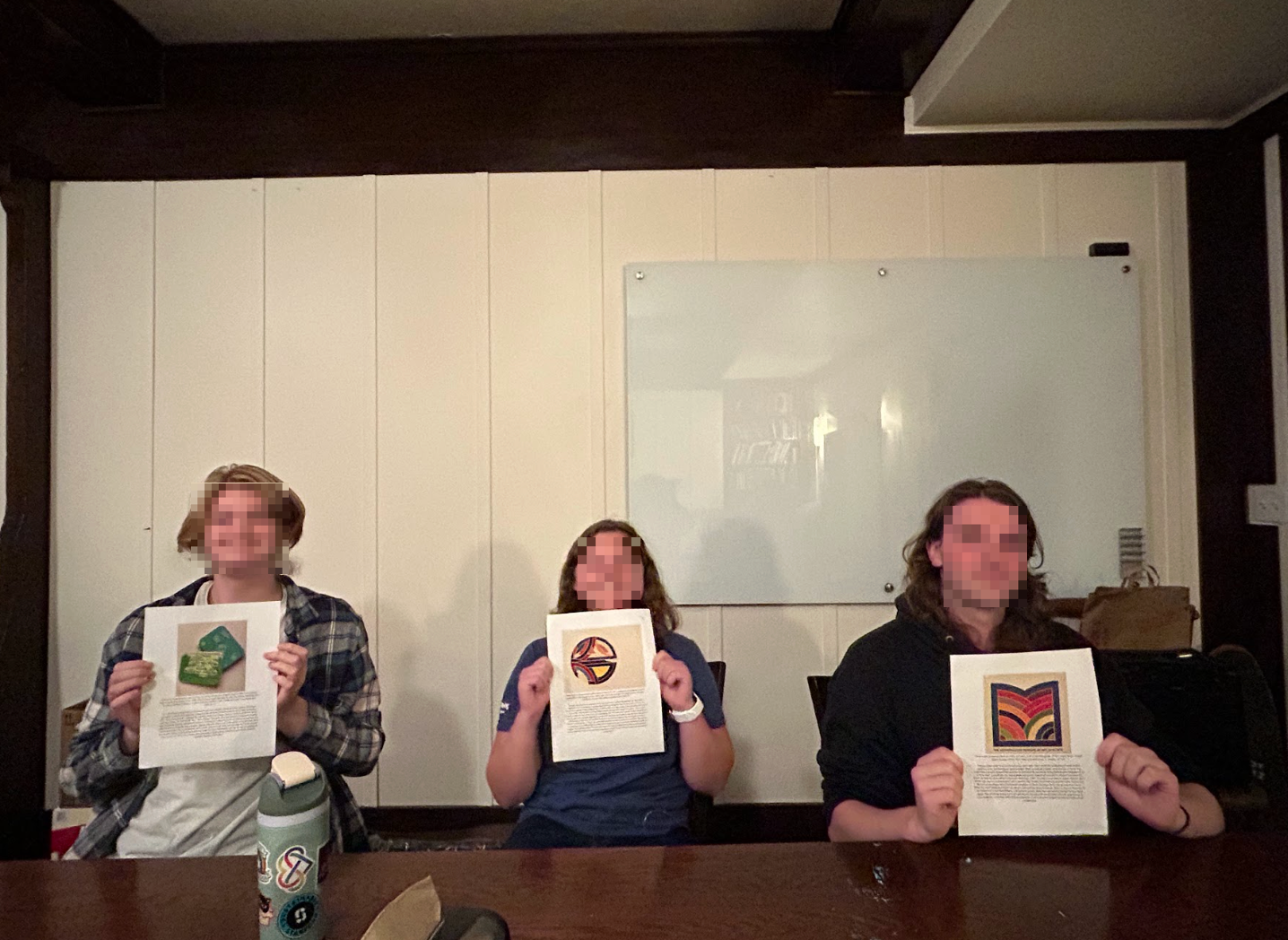
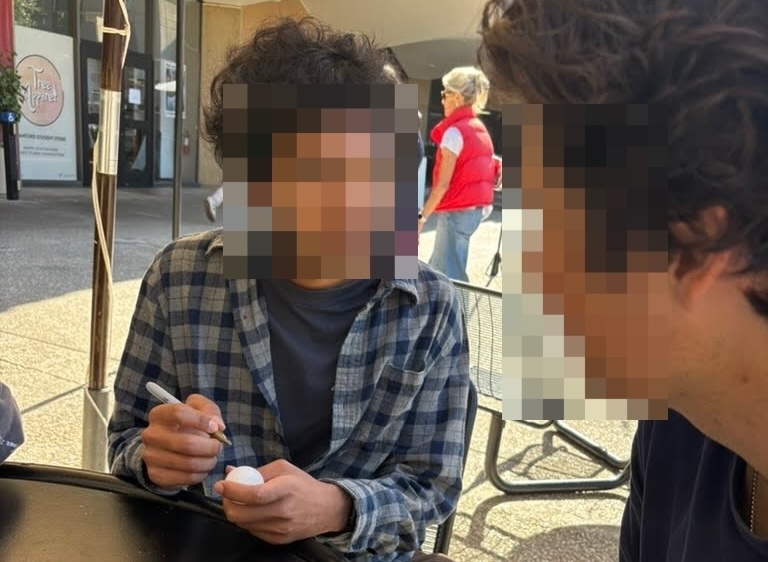
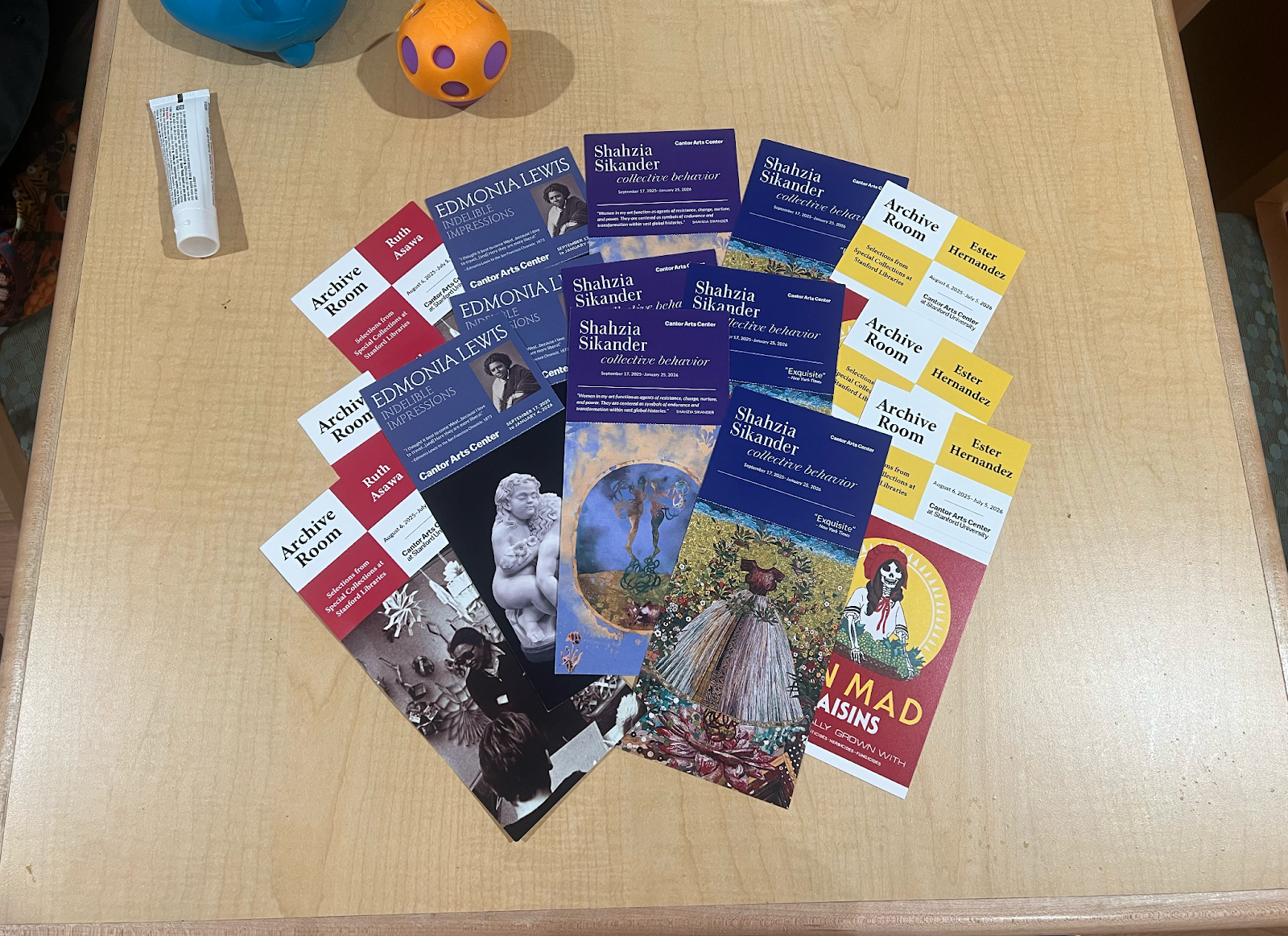
We stress-tested three concepts: art swiping for matching, challenge-based applications, and postcard engagement. Each experiment focused on identifying behavioral signals rather than validating aesthetics.
Swiping Match: Would competitive matching increase bonding or create friction?
Challenge Applications: Would students return for multiple rounds?
Postcards: Would passive exposure create downstream engagement?